

3 min read
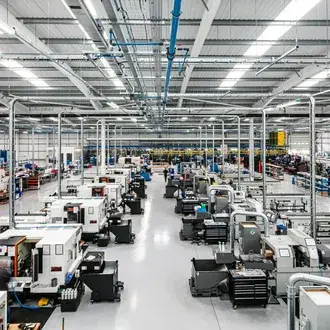
Your machines are running. Your employees are busy. Production is moving all day. So why are customer orders still shipping late?
It's a frustrating situation for manufacturers. From the outside, everything looks productive. But when delivery dates arrive, jobs aren't always ready to ship. The problem is that a busy shop floor isn't necessarily an efficient one. Manufacturing delivery delays often result from problems that aren't immediately visible, including material shortages, unrealistic schedules, lengthy setup times and bottlenecks between operations. Understanding what's slowing production down is the first step toward delivering more orders on time.
Being Busy Isn't the Same as Being Productive
It's easy to assume that if every machine is running, your shop must be operating efficiently. But machine utilization is only one part of the equation. A machine might be producing parts for a job that isn't due for another month while a higher-priority order waits for material or an available workcenter. Employees may be working overtime to complete production tasks that weren't scheduled in the right sequence. The result is a shop that stays busy without consistently meeting customer delivery commitments. To improve on-time delivery, manufacturers need to understand how work moves through the entire production process.
Five Reasons Manufacturing Orders Fall Behind Schedule
1. Materials Aren't Available When Production Needs Them 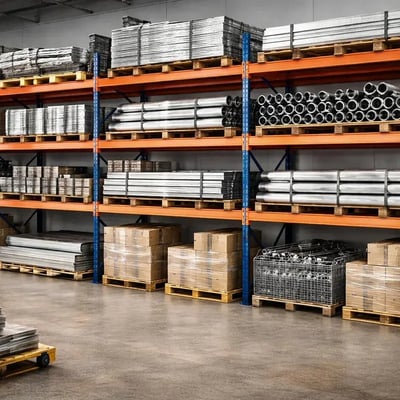
A job can be ready to start, but production can't move forward without the required materials. Maybe a supplier delivery is late. Maybe inventory records are incorrect. Or perhaps materials have been allocated to another job. When material availability isn't considered during scheduling, manufacturers risk releasing work orders that can't be completed as planned.
What helps: Connect material requirements with purchasing, inventory and production scheduling so shortages can be identified earlier.
2. Setup Times Take Longer Than Expected
Machine setup is an important part of manufacturing, but it can be overlooked during production planning. Changing tooling, adjusting equipment and preparing a machine for a new job all require time. If a schedule only accounts for production run time, the shop may be promising completion dates that aren't realistic. Even small setup-time differences can add up when multiple jobs pass through the same workcenter.
What helps: Use accurate setup estimates based on historical production information and account for changeovers when building schedules.
3. Bottlenecks Slow Down the Entire Shop
Every manufacturing operation has constraints. One workcenter may be able to process jobs much faster than the next, creating a backlog of unfinished work. For example, machining might complete 100 parts per hour while finishing can only process 60. Even if machining runs at full capacity, finished parts can't move through production faster than the downstream operation allows. Running more work through the first machine may only increase work in process.
What helps: Identify constrained workcenters and schedule production around realistic capacity.
4. Production Priorities Keep Changing
Rush orders happen. Customer requirements change. Equipment breaks down. But when production priorities change constantly, employees can spend more time adjusting schedules than completing work. A job that was the top priority yesterday may be pushed aside for a new order today. Without clear visibility into the impact of those decisions, production managers may unintentionally delay other commitments.
What helps: Evaluate how schedule changes affect available capacity, material requirements and existing delivery dates before shifting priorities.
5. Production Schedules Don't Reflect Actual Capacity
A schedule can look perfect on paper while being impossible to execute. If production planning assumes unlimited machine availability or doesn't account for downtime, maintenance, employee availability and setup time, delivery commitments can become unrealistic. Manufacturers need schedules based on the resources they actually have, not just the dates they want to achieve.
What helps: Compare required work against available machine and labor capacity, then adjust schedules as conditions change.
How ERP Helps Manufacturers Improve On-Time Delivery
Manufacturing ERP software can help connect the information needed to plan and monitor production. When scheduling, inventory, purchasing and shop floor data work together, production managers can gain a clearer understanding of what's happening across the facility.
This can help manufacturers:
- Review material availability before releasing jobs
- Monitor work order progress
- Identify overloaded workcenters
- Compare planned production times with actual results
- Evaluate the impact of schedule changes
- Identify jobs at risk of missing their delivery dates
Instead of relying entirely on manual updates or disconnected spreadsheets, teams can use more consistent information to make scheduling decisions.
What Should Production Managers Measure?
Improving delivery performance starts with tracking the right information.
Four useful metrics include:
-
On-time delivery rate: The percentage of customer orders delivered by their committed dates.
-
Schedule adherence: How closely actual production follows the planned schedule.
-
Work in process: The amount of unfinished production moving through the shop.
-
Actual vs. estimated production time: The difference between planned and recorded setup and run times.
Tracking these metrics can help identify recurring problems and determine whether process improvements are working.
The Goal Isn't to Keep Every Machine Running
A productive manufacturing shop doesn't simply keep equipment busy. It moves the right jobs through the right operations at the right time. When production managers have visibility into material availability, machine capacity and work order progress, they can make better scheduling decisions and reduce unexpected delays. The result is a more predictable production process and a better experience for customers.
Want to improve on-time delivery? Discover how Global Shop Solutions ERP software connects production scheduling, inventory and shop floor information to help manufacturers plan with greater confidence.