

4 min read
In modern discrete manufacturing, the challenge is no longer collecting data. It’s making that data consistent, timely and actionable across an increasingly complex operational footprint. As manufacturers expand into multi-site operations, they introduce variability in processes, systems, labor practices and reporting standards. Without a unified data strategy, this complexity creates blind spots that impact production scheduling, plant performance monitoring, cost control and downtime reduction.
At its core, manufacturing performance is driven by how quickly and accurately an organization can translate shop floor activity into decisions. When production data is delayed, manually entered or siloed by location, it becomes historical instead of operational. This forces plant and operations managers into reactive decision-making, where problems are addressed only after they have already impacted output, delivery or quality.
Real-time multi-site shop floor data changes this dynamic by establishing a continuous, synchronized flow of production intelligence across every facility. Enabled by shop floor management software, it captures data directly at the source, standardizes it across locations and delivers it instantly into a centralized system.
This creates a live operational environment where every job, resource and constraint is visible as it happens, not after the fact.
WHAT REAL-TIME MULTI-SITE SHOP FLOOR DATA MEANS
Real-time multi-site shop floor data includes key production metrics such as:
-
Labor hours
-
Machine uptime
-
Job status
-
Material usage
-
Work-in-progress (WIP)
All production data flows into a centralized system. This creates a connected operational environment where leaders can monitor activity across every location at the same time.
For plant managers, this acts as a digital thread connecting jobs, machines and employees across the enterprise. It eliminates information silos and ensures decisions are based on current, accurate data rather than delayed reports.
HOW SHOP FLOOR MANAGEMENT SOFTWARE CAPTURES DATA AT THE SOURCE
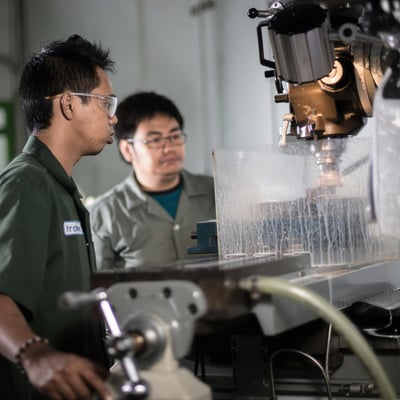 Real-time visibility starts with accurate data capture directly from the shop floor.
Modern shop floor management software replaces manual data entry and paper-based tracking with automated data collection tools. Shop Floor Data Collection stations allow operators to record activity in real time using barcodes, RFID scanners or mobile devices.
When a worker logs into a job, starts a machine or completes a task, that information is immediately recorded and shared across the system.
In multi-site operations, this happens simultaneously across all facilities. A job update in one plant is instantly visible to managers and schedulers at other locations. This keeps WIP accurate and eliminates communication delays between plants.
Capturing data at the source also improves accuracy. It removes the need for manual transcription reducing the risk of errors and creating a reliable foundation for analysis and decision-making.
WHY DATA NORMALIZATION IS CRITICAL IN MULTI-SITE OPERATIONS
Capturing data is only part of the solution. For multi-site manufacturing operations to function efficiently, production data must be consistent and comparable across all locations.
Without standardization, different plants often track work using different definitions, processes and reporting methods. This makes it difficult to compare performance or identify best practices.
A single-system ERP approach solves this by using a centralized database and standardizing workflows, costing methods and production metrics across the entire organization. Data normalization ensures that labor hours, machine efficiency, scrap and costs are measured the same way at every facility.
For example, consistent costing models allow measurement of Freight, Labor, Overhead, Outside Services, Other and Material (FLOOOM) the same way across all sites. This creates a reliable basis for comparing performance and identifying opportunities for improvement.
With normalized data, manufacturers gain a reliable foundation for performance analysis and decision-making. Without it, multi-site data cannot be trusted.
HOW REAL-TIME DATA IMPROVES PLANT PERFORMANCE MONITORING
Real-time shop floor data improves plant performance by providing immediate visibility into operations, allowing teams to identify and address issues as they occur.
Instead of relying on static reports, managers use real-time dashboards to monitor:
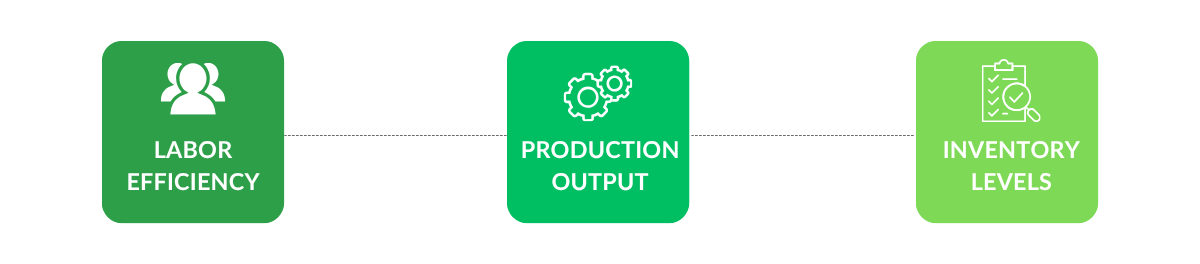
This allows leaders to spot inefficiencies early and take corrective action before they impact production. It also enables cross-plant benchmarking, where high-performing facilities can serve as models for improvement across the organization.
Advanced systems now use AI-driven analytics to identify patterns, predict issues and recommend actions before disruptions occur. This shift from reactive to proactive management is one of the most significant benefits of modern shop floor management software.
THE IMPACT ON PRODUCTION SCHEDULING
Production scheduling becomes far more accurate and flexible when it is driven by real-time data. In multi-site environments, schedulers must balance capacity, material availability and demand across multiple facilities. Without real-time visibility, scheduling is based on assumptions, often leading to inefficiencies.
With real-time data, schedulers can:
- See current workload and capacity across all facilities
-
Schedule jobs based on actual conditions
-
Ensure materials are available before production begins
-
Adjust quickly to changes such as rush orders or machine downtime
This level of insight helps maintain production stability even in dynamic environments.
HOW REAL-TIME DATA DRIVES DOWNTIME REDUCTION
Real-time production data helps reduce downtime by identifying issues early and enabling proactive maintenance. By continuously monitoring machine performance, manufacturers can detect early warning signs such as slowdowns or fluctuations in operating conditions. This allows maintenance teams to intervene before equipment fails.
Predictive maintenance, supported by real-time data and analytics, helps reduce unplanned downtime and extend the life of equipment. Visibility across multiple sites also allows organizations to identify common issues and implement standardized solutions, improving consistency across operations.
HOW IT ALL COMES TOGETHER IN A UNIFIED SYSTEM
The true value of real-time multi-site shop floor data comes from integration. Shop floor management software connects data from production, inventory, scheduling and financial systems into a single platform. 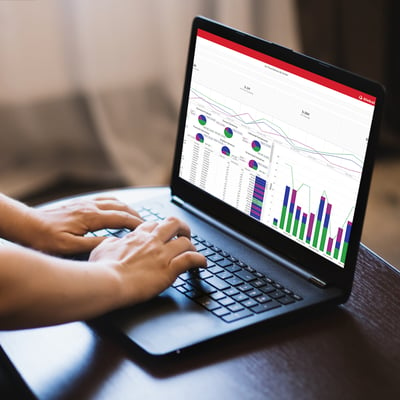
This ensures:
-
Every department is working with the same information
-
Production updates automatically inform scheduling decisions
-
Inventory levels adjust in real time based on material usage
-
Financial systems reflect operational activity without manual input
Global Shop Solutions ERP software is focused around this one-system approach, allowing manufacturers to manage multiple locations within a single ERP environment. This simplifies complexity while providing the visibility needed to operate efficiently at scale.
WHY THIS MATTERS FOR DISCRETE MANUFACTURERS
For discrete manufacturers, where production involves complex assemblies and detailed tracking, real-time visibility across all locations is essential.
Real-time multi-site shop floor data is no longer a competitive advantage. It’s a requirement for manufacturers looking to operate efficiently across multiple locations. By capturing data at the source, normalizing it across the organization and making it accessible in real time, shop floor management software provides the visibility needed to improve plant performance monitoring, optimize production scheduling and achieve meaningful downtime reduction.
For operations leaders, this means moving from reactive problem-solving to proactive, data-driven decision-making. If your multi-site manufacturing operations are still relying on disconnected systems or delayed reporting, now is the time to evaluate a unified approach. Contact us to see the tools to connect your multi-site shop operations and simplify manufacturing from quote to cash.