

3 min read

It’s 3:42 pm on a Wednesday and your phone lights up.
Your customer isn’t calling to chat. They’re calling because a shipment promised for Friday just slipped to next Tuesday. Their line is going to stop. Their people are going to stand around. Their customers are going to scream. And in about 60 seconds, you’re going to hear the question every manufacturer dreads:
“What happened?”
Late jobs don’t just cost time. They cost trust. And trust is the only currency that matters when buyers have options.
If you’re fighting late deliveries right now, you’re not alone. Even strong shops get trapped in the same cycle: manual scheduling, production slowdowns, inventory surprises, weak confidence in due dates and communication gaps that turn small delays into customer disasters.
But here’s the truth most manufacturers don’t want to say out loud: late delivery is rarely a “shop floor problem.” It’s a system problem. And systems can be fixed.
Late Deliveries aren’t Random. They’re Built In.
When delivery performance drops, it usually isn’t because your team got lazy. It’s because scheduling and execution are being run on memory, spreadsheets or tribal knowledge instead of reality.
Here’s what that looks like in the wild:
- A scheduler builds the plan manually, then spends the rest of the week patching holes and moving jobs around.
- A job hits the floor, and suddenly someone realizes a key part is short.
- A machine goes down, a hot job jumps the line and your “schedule” becomes a wish list.
- You’re not even sure if your delivery dates are honest anymore, so your people stop trusting them too.
The result is predictable: overtime spikes, expedite shipping costs pile up and your margin gets quietly eaten alive. Worse, some B2B customers bake penalties directly into contracts. Miss enough deadlines and you’ll pay for it twice: once in chargebacks, and again when they switch suppliers.
So what changes the game?
The Turning Point: When Scheduling Stops Being a Guess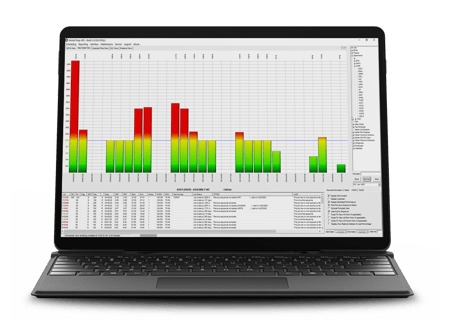
Manufacturers who hit consistent 90%, 95% and even 100% on-time delivery don’t do it by “trying harder.” They do it by removing human guesswork from the plan.
That’s what ERP-driven scheduling does.
Instead of building schedules by hand, ERP automates the reality check: material availability, machine and labor capacity, routing, lead times and every job already in motion. Jobs flow based on real constraints, not hope. When something changes, the schedule updates instantly instead of collapsing into chaos.
This is why medium-to-large manufacturers rely on ERP as a core operating system – and why about 80% of small and midsize manufacturers over $10M in revenue already depend on it, too. Without it, the late-delivery cycle just keeps repeating.
But talk is cheap. Let’s look at what this actually does in real companies.
Three Manufacturers Who Refused to Stay Late
MUM Industries: Seeing the Inventory Truth Before the Job Starts
MUM Industries lives in the world of large, complex BOMs across consumer, commercial and industrial contracts. Their old reality looked like everyone else’s: quote the job, accept the due date, then pray the materials show up.
ERP changed that.
Now, MUM Industries can open a massive BOM, check inventory in real time, enter required part quantities and know instantly whether they can hit the customer’s desired due date. No scrambling. No “we’ll figure it out later.” That one capability keeps their on-time delivery hovering around 98%.
That’s not luck. That’s control.
Bendon Gear and Machine: Knowing Which Jobs Are Slipping Before Customers Do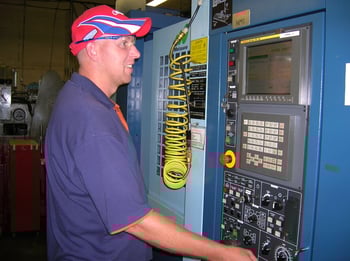
Precision gear manufacturing doesn’t forgive surprises. Bendon Gear and Machine needed a way to see every job on the floor, in motion, right now.
With ERP, production managers log in and get a live snapshot: what’s on schedule, what’s at risk, what’s late and who’s clocked into which operation. Instead of waiting for problems to explode, they intercept them early.
The payoff? 100% customer ratings for delivery performance and a Super Excellence award from a major customer.
Awards don’t show up when you’re always apologizing for late shipments.
Alexandra Pro-Fab: Moving the Schedule Without Breaking Everything
Alexandra Pro-Fab runs plastic molding and fabrication. Their world changes fast – rush jobs, machine constraints and sudden shifts in priority.
ERP paired with APS gives them instant visibility into open machine time. They can pull jobs forward or push others back, and the system immediately shows how that decision impacts every other job in the plant.
No guessing. No domino effect discovered too late.
Their delivery rates now average 97.6% overall, and they hold 100% on-time delivery for their biggest customer (a $16M annual account).
That’s how you keep a whale happy.
The Real Prize: Customers Who Believe You
Here’s the underrated win nobody talks about enough: when your on-time delivery lives in the high 90s, customers stop checking on you.
- They stop calling.
- They stop building backup suppliers.
- They stop padding your lead times “just in case.”
Your promises become boring in the best way – because they’re true. And even when something goes wrong (because nobody’s perfect), a strong on-time record buys you credibility. Customers will accept a delay if it’s the exception, not the system.
Move your delivery rates into the high 90% range and you don’t just protect your reputation. You turn delivery into a competitive weapon. Ready to make your delivery a superpower? See how ERP and automated scheduling can push your on-time delivery into the high 90s (or higher).