

3 min read

The Most Expensive Waste in Your Plant Isn’t Scrap
It’s people waiting.
Waiting on paperwork.
Waiting on instructions.
Waiting on materials.
Waiting on answers that should already exist.
You can buy faster machines. You can negotiate better material pricing. But if skilled labor is standing around, hunting for information, fixing mistakes or redoing work that should’ve been right the first time, your margin is bleeding out quietly.
Manufacturing labor efficiency isn’t about working harder. It’s about removing friction so skilled people can actually produce.
And right now, most shops are full of friction.
Why Labor Efficiency Collapses Under Pressure
Every manufacturer feels it: tighter labor markets, fewer skilled workers, more product complexity and zero tolerance for missed deadlines. Yet many shops are still running production with disconnected systems, manual coordination and workflows that punish efficiency.
Here’s where labor efficiency really breaks down:
- Schedules that don’t reflect real capacity
- Machinists wasting time searching for routers, drawings, BOMs or inventory
- Rework and scrap stealing hours that never show up cleanly on reports
- Poor visibility into who’s overloaded and who’s underutilized
- Training gaps that stay hidden until quality or delivery takes a hit
The result isn’t just slower production. It’s overtime bloat, burnout, missed opportunities and managers constantly firefighting instead of improving.
Labor doesn’t become inefficient overnight. It becomes inefficient when systems force people to work around them.
The Breakthrough: When Work Flows Instead of Stalls
High-efficiency manufacturers don’t rely on hero employees to hold everything together. They build systems that guide work automatically.
That’s where ERP changes the game.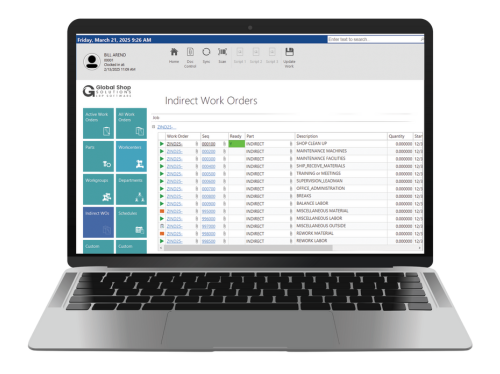
ERP removes the low-value noise that clogs a shop floor by automating coordination, centralizing data and enforcing consistency across departments.
Instead of reacting, teams operate with clarity:
- Schedulers see true capacity and load jobs realistically
- Machinists know exactly what to work on now and next
- Purchasing aligns with demand automatically
- Managers see labor performance in real time, not weeks later
The biggest win isn’t speed. It’s focus. When people stop chasing information, productivity climbs naturally.
From Anarchy to Coordination: How ERP Unlocks Labor Efficiency
ERP becomes the digital nervous system of the shop, connecting humans to the data they need without delay.
Digital communication between people and systems eliminates repetitive manual tasks and reduces the chance for error.
Automation handles routine activities like data entry, reporting, approvals and purchasing so employees can focus on work that actually adds value. Centralized data ensures everyone works from the same truth, eliminating rework caused by miscommunication or outdated information.
The result is coordination without constant meetings, consistency without micromanagement and labor that operates as a strategic asset instead of a reactive cost.
Four Manufacturers Who Refused to Waste Labor
Advanced Plastiform, Inc.: Doubling Logistics Efficiency
Advanced Plastiform, Inc. runs custom plastic molding, fabrication, thermoforming and assembly. Before ERP, too much labor time disappeared into searching, tracking and correcting.
With ERP, managers see true costs and profitability by item. Automated purchasing keeps materials and finished goods balanced. Machinists no longer hunt for routers, drawings, BOMs, POs or inventory lists.
The payoff? A 100% increase in logistics efficiency, driven purely by removing wasted labor.
Automation Tool & Die, Inc.: Exposing Hidden Labor Drain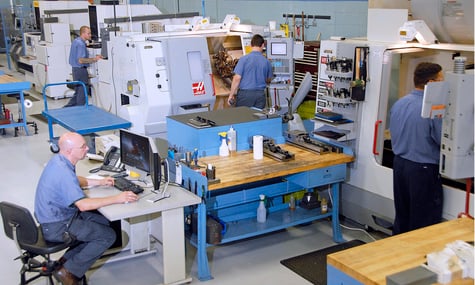
Automation Tool & Die, Inc. builds custom tooling for automotive, industrial hardware and outdoor leisure products. Their challenge wasn’t obvious inefficiency. It was invisible inefficiency.
ERP exposed non-value-added activities by employee, workcenter and part number. That insight showed exactly where indirect labor costs were leaking and allowed leadership to correct training gaps and maintenance issues before they became chronic problems.
Efficiency improved because effort finally matched reality.
Manufacturing Resource Group (MRG): Faster Quotes, Faster Corrections
MRG produces electromechanical and cable assemblies across multiple regulated industries. ERP simplified labor on both sides of the operation.
Sales teams quote from a few screens instead of chasing data. When products are returned, quality teams trace the issue instantly and take corrective action. Job costing that once took excessive time is now completed quickly, freeing labor to focus on customer service and improvement.
Efficiency isn’t just on the floor. It’s across the business.
AMG, Inc.: Saving Thousands of Overtime Hours
AMG, Inc. is a custom job shop producing precision-engineered components. Labor efficiency mattered most in overtime planning and scheduling accuracy.
ERP improved overtime forecasting and saved thousands of labor hours. Inventory supply-and-demand visibility helped account managers set realistic lead times, win more short-run jobs and avoid labor spikes caused by poor planning.
That’s labor efficiency turning directly into revenue.
Labor Efficiency is a Leadership Decision
Low efficiency is rarely about employee effort. It’s about broken systems that force smart people to work inefficiently.
ERP consolidates once-fragmented departments into a single platform so employees spend less time finding work and more time doing it.
It transforms labor from a blunt expense into a measurable, optimizable resource. When everyone works from the same data in real time, scheduling becomes accurate, coordination becomes natural and productivity becomes sustainable.
Ready to Stop Paying for Waiting?
If your skilled workforce is stuck searching, correcting or waiting, it’s time to change the system around them. In a short demo, we’ll show you how Global Shop Solutions helps manufacturers eliminate labor waste, improve scheduling accuracy and turn productivity into a competitive advantage. Schedule a demo and see what happens when your people finally get the clarity they need to produce at their best.