

4 min read

The Day Inventory Lied to You
Picture this.
It’s Monday morning. Coffee in hand. The schedule is full. Shipping is stacked. Your biggest jobs are lined up like dominos, ready to fall into place.
Then the floor supervisor walks into your office with that look.
“We can’t start Job 2471.”
You blink. “Why not?”
“Missing parts.”
You check the spreadsheet. The system says you have them. Plenty of them. But on the shelf? Ghost town.
Now you’ve got operators standing idle, machines waiting, a customer clock ticking down and a production plan that’s already bleeding out by 9:07 a.m.
That’s inventory accuracy in manufacturing. When it’s good, nobody talks about it. When it’s bad, everything burns.
And here’s the dirty secret: manual inventory systems don’t “sort of” work. They work right up until they don’t. Then they punish you with stockouts, overbuys, late jobs and the kind of chaos that makes good people want to quit.
Manual Inventory Isn’t Old School. It’s Self-Sabotage.
Let’s call it what it is. Handwritten counts. Whiteboards. Tribal knowledge. Spreadsheet gymnastics. Pick tickets stapled to clipboards. A “system” that exists mostly in somebody’s head.
Manual tracking is a factory reset button for mistakes. Typos happen. Miscounts happen. Inventory gets moved and nobody records it. Parts get scrapped but never deducted. A bin looks full until you realize it’s full of the wrong revision.
And because the data is bad, the decisions get worse:
- You stock out and halt jobs because parts should be there but aren’t.
- You overbuy “just in case,” tying up cash in shelves that look like a hardware store clearance aisle.
- You waste hours hunting inventory that is technically “in stock” but physically missing.
- You spend days on physical counts that shut down flow and still don’t fix the root problem.
Manual inventory makes you blind. And blind shops don’t scale. They stumble.
Turn Inventory From a Liability Into a Weapon
Smart manufacturers don’t accept inventory chaos as “part of the business.” They hunt it like a threat.
The shift happens when you stop relying on memory and paper and start running inventory inside an ERP system that tracks the truth in real time.
Here’s why that matters: ERP builds accuracy into how inventory lives and moves:
- Automated ordering and purchasing eliminate bad data entry at the source.
- Material flow is tracked job-to-job, so shortages surface early instead of mid-production.
- Inventory financials stay aligned, which means purchasing, scheduling and quoting don’t drift into fantasy.
- Faster, cleaner data shrinks cycle times and makes lean possible instead of theoretical.
This is how manufacturers reach 99% accuracy and keep it there: not by counting harder, but by counting smarter.
And the wins compound fast. When inventory is right, production is right. Delivery is right. Cash flow is right. Your customer experience stops being a gamble.
Still skeptical? Good. Let’s look at four companies who went through the fire and came out clean.
Four Manufacturers Who Stopped Trusting “Good Enough”
Hi-Vac Corporation: Multiple Bins, Zero Confusion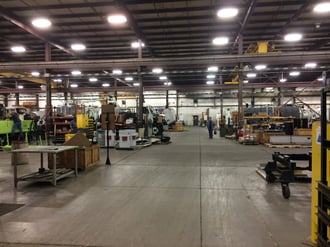
Hi-Vac builds custom vacuum products for brutal industrial conditions. Their parts don’t sit politely in one spot; they live in multiple locations across a busy operation. ERP let them assign one part number to multiple bin locations and track exactly how many of each part they had, and where. No more scavenger hunts. No more “we think it’s over there.”
Then they layered in Auto Purchasing, and purchasing went from reactive to controlled. Less time wasted. Better material costs. Faster buying. Inventory accuracy became the foundation instead of the bottleneck.
Martin’s Wood Products: Six-Figure Inventory Drop in 90 Days
Martin’s Wood Products makes high-end hardwood furniture. Custom builds. Variable specs. The kind of shop where inventory can swell quietly until it eats your margin alive.
After implementing ERP, they didn’t just get visibility. They got relief. Within three months, they cut inventory by six figures. Not by cutting corners, but by finally buying what they actually needed, when they needed it.
Their lean journey accelerated because the system tied everything together from work order generation to shipping. When inventory got accurate, the whole floor got lighter, faster, and more predictable.
Precision Edge Surgical Products: Traceability at the Speed of a Scan
Precision Edge builds surgical components and tools for major medical device OEMs. For them, inventory accuracy isn’t just efficiency. It’s compliance. It’s survival. Their ERP system gave them lot-to-lot “cradle to grave” tracking baked directly into inventory.
Add barcoding, handheld scanners, wireless printing, and suddenly traceability that used to take hours happens in minutes. Inventory is tracked exactly, instantly and with the precision a medical supply chain demands.
Richard Manufacturing Company: Instant Answers, Fewer Overbuys
Richard Manufacturing Company supplies wiring and electro-mechanical components for defense and government contractors. Certifications matter. Residual inventory matters. Getting it wrong isn’t an option. With ERP, anyone in the company can find inventory status in clicks: what’s available, how many, and where it lives.
That visibility prevents over-ordering because buyers can see residual parts that newly scheduled jobs can use. And with lot number tracking, they trace every part through the system to protect certifications without going on a paperwork safari.
Accuracy Is the Difference Between Scaling and Stalling
As your shop grows, manual inventory doesn’t just get harder. It gets impossible.
More parts, more revisions, more jobs, more suppliers, more movement. Manual systems can’t scale fast enough to keep up, and they’re a nightmare to audit.
ERP solves that by centralizing data across inventory, production, supply chain, finance and scheduling into one unified source of truth.
That’s what accuracy really is: one truth, everywhere, all the time.
Want Inventory You Can Bet Your Schedule On?
If you’re done playing roulette with your parts, let’s fix it. In a quick demo, we’ll show you how Global Shop Solutions tracks inventory in real time, automates purchasing, and gives your team instant visibility into what you have, where it is and what it’s tied to. No fluff. No theory. Just a clear picture of what it would take to move your shop from inventory chaos to 99% accuracy. Schedule a demo, and let’s make “missing parts” a story you used to tell.