

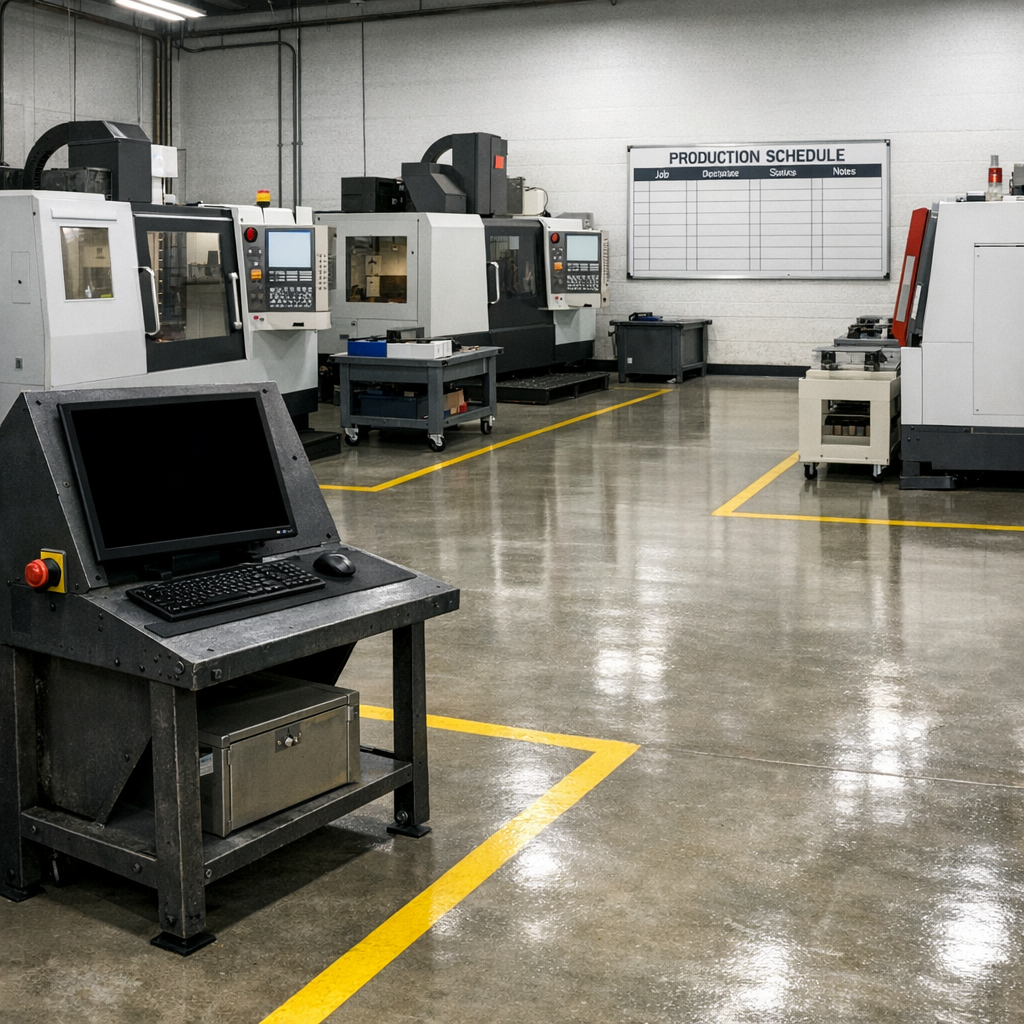
ERP planning that mirrors real shop constraints
Manufacturers do not want prettier schedules. They want steadier production, fewer disruptions and customers getting parts on time. ERP planning only works when it reflects how the shop actually runs. Otherwise, the floor ignores it and falls back on whiteboards, paper travelers and tribal knowledge.
Start by looking at how work is prioritized today. In many plants, schedules change constantly because of breakdowns, late material or rush orders. Over time, operators stop trusting ERP because the plan never matches reality.
Common planning problems include:
- Jobs waiting on missing material or tooling
- Dispatch lists that do not match staged work
- Changeovers taking longer than planned
- Schedules that ignore bottlenecks or downtime
Manufacturing.net warns that desk-only planning and relying on software defaults often create more chaos. Improvement comes from combining ERP with real shop floor processes and consistent routines.
Design ERP-backed production plans that respect real constraints
Good ERP planning starts with accurate system setup. Machines, labor, tooling and suppliers all limit capacity. If ERP assumes unlimited resources, the schedule may look good on screen but fail on the floor.
Manufacturers should:
- Use realistic setup and run times
- Include queue time at bottlenecks
- Match calendars to actual shifts and maintenance schedules
- Account for supplier delays in lead times
Keep planning tools simple and easy to use. Dispatch lists should show only key information and operators should be able to report work quickly. When ERP reflects real conditions, the floor is far more likely to trust the schedule.
Sustain ERP-driven planning with simple KPIs
Strong planning requires daily visibility. Track schedule adherence, lead times and on-time delivery to see whether the system is working. Capture reasons for delays inside ERP so teams can identify patterns instead of relying on guesswork.
Support the process with simple habits:
- Hold short daily standups
- Review hot jobs and material risks
- Meet weekly across operations, purchasing and sales
- Update ERP data instead of fixing issues only on whiteboards
Over time, these habits create a quieter operation. Schedules stop changing every hour, crews spend less time chasing parts and throughput improves without adding equipment. Customers notice when delivery dates hold and rush jobs become the exception instead of the rule.
bringing erp planning back to reality
Effective ERP planning is not about building a perfect schedule. It is about creating a system the shop can realistically follow every day. When ERP reflects actual capacity, material availability and shop floor constraints, manufacturers gain more predictable production, stronger communication and better delivery performance. The companies that see lasting results are the ones that treat planning as an operational discipline, not just a software feature. With the right processes, accurate data and consistent routines, ERP becomes a practical tool for stabilizing production and supporting long-term growth.
READY TO SEE THESE IDEAS IN ACTION?
Take a self-guided tour of our AI-enabled ERP software applications.