

Measure setups and separate internal from external work
You cannot reduce what you do not measure.
Start changeover work by timing real setups on a few representative parts. Clock from last good piece to first good piece and capture each task in the sequence. Separate internal steps that require the machine to be down from external prep that can happen while the machine runs. The goal is to convert as much internal work to external as possible so the spindle sits idle less. This is classic Single Minute Exchange of Die (SMED) thinking applied with modern tools.
Build a simple template to record steps, times and pain points. Note tool changes, offsets, fixture swaps, first-article checks and material staging. Then look for obvious wins. Can you pre-stage fixtures and kits on a cart? Can you standardize offsets by tool families? Can you print labels and travelers in advance so operators do not leave the cell? Small changes add up fast when repeated across shifts and families. For a primer on the concepts, see these short references from the Lean Enterprise Institute on changeover, setup reduction and SMED.
Then capture the data where it matters most, inside your ERP, so improvements become the new standard rather than tribal knowledge.
Sequence jobs to cut changeovers without hurting due dates
Once you can see the work, use scheduling and dispatching to harvest the gains. Group jobs by family, material or tooling to reduce changeovers without hiding in big batches. Sequence operations so a machine runs similar setups back-to-back when capacity allows. The key is to do this with finite capacity so you do not make promises you cannot keep. Use your ERP’s planning and scheduling to simulate options before you commit. If you move a job to align with a family, check the ripple effect on downstream operations and delivery dates.
When a rush job lands, review which operation to bump and which due dates it will move. Tie material availability to dispatch so you do not sequence a job that will sit waiting for bar stock. For help building this discipline, review this APS overview and how accurate routings support smart sequences.
Done well, sequencing reduces setup hours, stabilizes flow and still respects customer due dates. You ship more with the same crew and the plant gets quieter.
Sustain gains with standard work, kits and KPIs
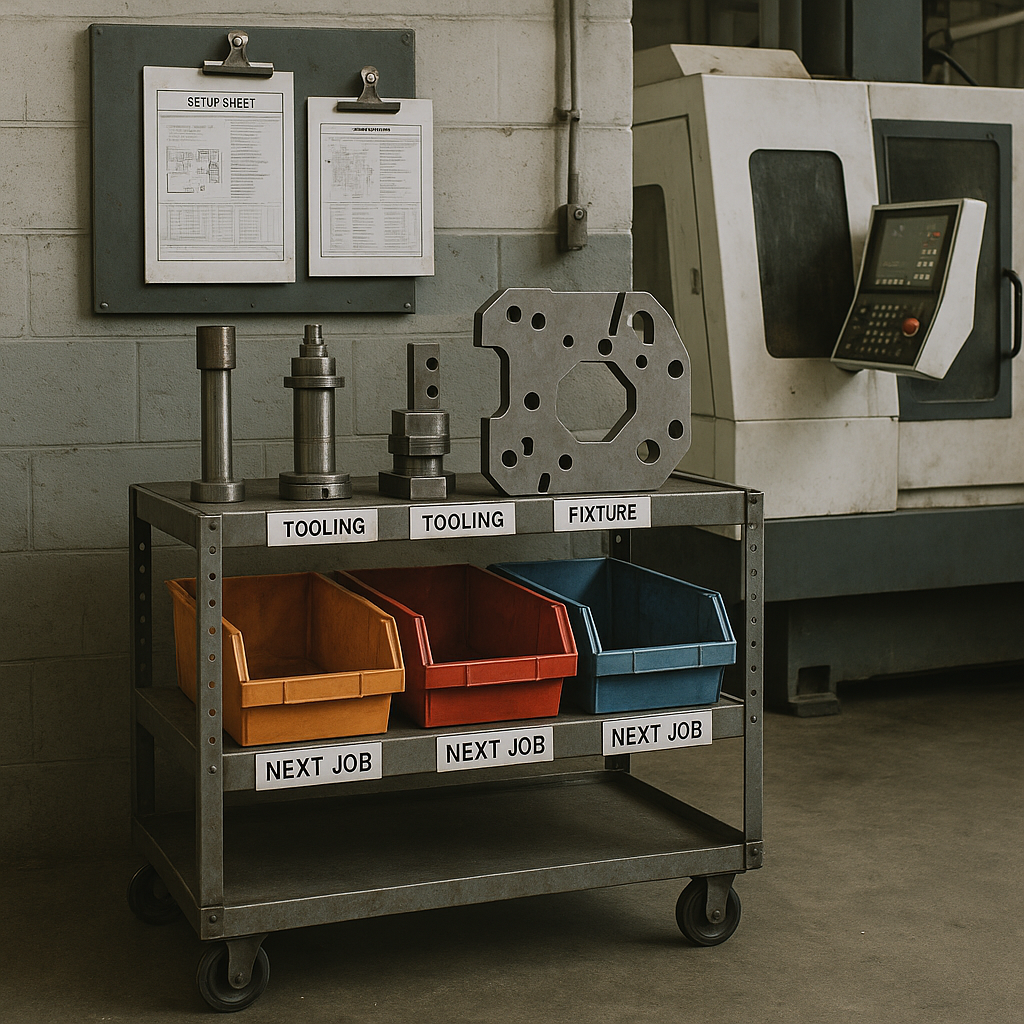
Sustaining setup gains requires standard work, kits and a few simple KPIs. Document the best-known method for each changeover and keep it visible at the machine. Build setup kits with labeled fixtures, tools, gage blocks and checklists so everything shows up on one cart. Color code bins for the next job and keep labels consistent. When a method changes, update the document and retire the old version so the next shift sees the same playbook.
Track a short list of metrics. Setup time by family, number of changeovers per shift and hours saved by sequencing. Review them at the daily huddle and celebrate small wins. Train backups so one vacation does not erase the gain. For practical inspiration on fast efficiency wins, see Purdue University's MEP quick gains. Keep these records in your ERP so the improvements stick and continue to compound.
With the right habits, your team will cut changeovers, hit dates and do more with less effort.
READY TO SEE THESE IDEAS IN ACTION?
Take a self-guided tour of our AI-enabled ERP software applications.