Improving Manufacturing Scheduling, Part 4
In the first three parts of our on-going series on manufacturing scheduling, we covered a wide swath of issues related to improving accuracy, visibility, flexibility, reducing costs, and preventing bottleneck. The crux of these solutions is all found in one place—enterprise resource planning software (ERP). Today, let’s examine just how scheduling through ERP is achieved.
By freeing up your time, ERP scheduling allows you to make better decisions and become more of a proactive manager of people and resources. It redefines your role, elevating it to a more strategic position and increasing your value to the company.
The ERP scheduling module is a sophisticated tool that allows the planner to efficiently and effectively manage the entire job-scheduling process from the moment the order comes in the door until the part or project is completed and shipped off to the customer. The schedule can be completely automated or can require minimal input. The system tells you what parts need to go on which machines and when, how much material is required, whether that material is in stock or needs to be ordered, employee availability and constraints, and any other task that needs to be performed for that specific job.
More important, the ERP scheduling module allows you to track everything you need to know about every job or project in the system from beginning to end, including labor costs, machine efficiency, setup and run times, work in progress and on-time completion rates. In fact, everything you used to do on multiple spreadsheets, white boards or in your head is now handled instantly and error-free by the ERP system. As a result, you can now spend more time managing events as they occur on the shop floor and less time stuck in your office trying to unblock the latest bottleneck or miscommunication.
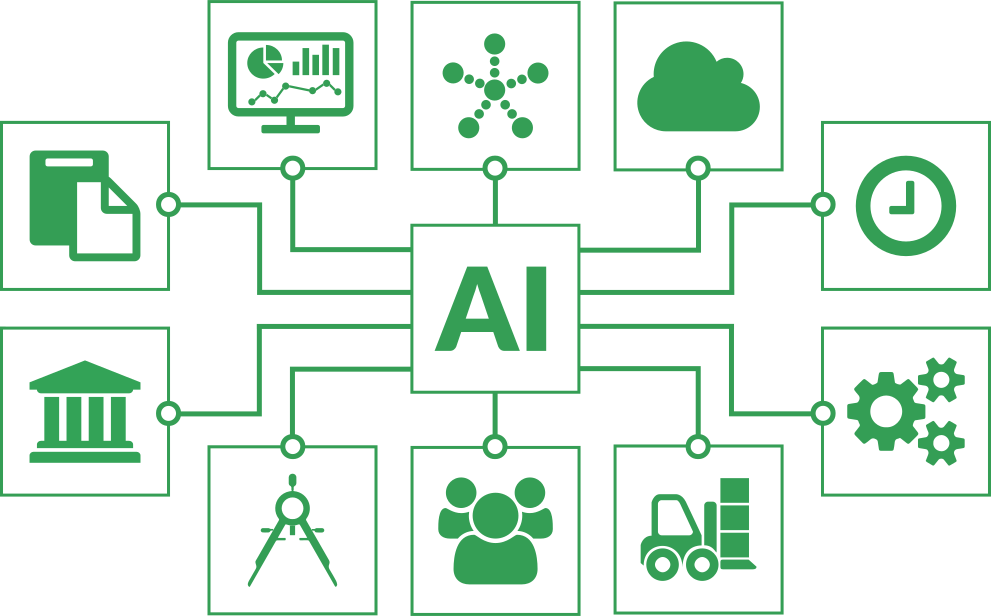
But the real power of the ERP scheduling module lies not so much in what it does for you (automatically schedule jobs) as in what it enables you to do by providing instant access to critical information in a variety of formats. Today, the more powerful ERP software products will incorporate some sort of Advanced Planning and Scheduling (APS) module within their system. These modules will consist of five to seven primary functions that track and manage every aspect of the scheduling process. For example, primary functions consist of scheduling, reporting, interface, maintenance, and service. These functions allow the scheduler to perform all the essential tasks required to schedule and manage a busy shop floor.
Again, diligence in maintaining a smooth schedule and sharp planning effort will mean continuous human involvement in the task. However, ERP software can help, and help tremendously, to reduce the stress involved in ensuring delivery dates are being met, and customers are staying satisfied with performance.