Archive for July, 2008

Project Management Series: Bill of Materials

Monday, July 28th, 2008

Chefs use them. Artists use them. Manufacturer and job shop project managers use them, too. When you have a project involving any number of materials or other physical elements, having a complete listing of those materials, ordered in some logical way, is a helpful tool to stay on-track and on-schedule throughout the production process. For chefs, having the recipe lets them know what material they need to complete a dish, and what materials to order should they be out of certain ingredients-as-inventory. For artists, the requirements to stretch, prime, and paint the canvas involve considerable forethought regarding material and material costing.

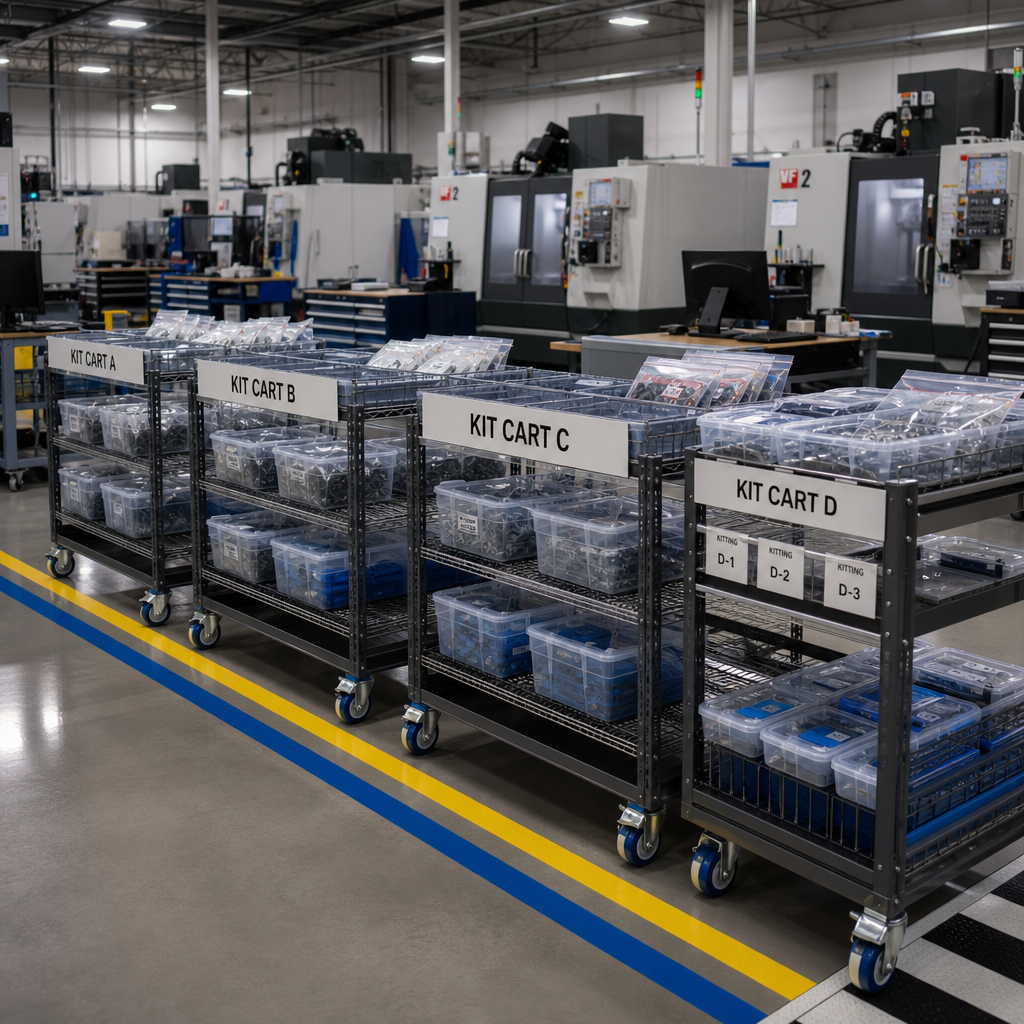
For manufacturers and job shops, the Bill of Materials (BOM) provides a complete listing or set of the physical elements needed to produce or otherwise service a product. BOM requirements dictate that all elements be included in order to provide not only an accurate cost accounting of the materials, but to ensure that parts, assemblies, and services are done with quality in mind.

To bring ease of understanding to the material requirements found within the BOM, it is formatted in such a way that each element (i.e., raw materials, parts, sub-assemblies, etc.) is clearly broken out and indented down to (more…)

Project Management Series: Managing the Successful Shop Project

Monday, July 21st, 2008

A project, by the very definition of the term, is all about parts. Parts considered, parts acquired, parts assembled, parts finished. In a job shop or on a manufacturing floor, a project usually involves another aspect—people. In a shop project, people work as a team to compete a task that, ultimately, is greater than the sum of its parts. The questions to consider, however, are how often do shop projects end up as unsuccessful, and why? With so many people contributing to the cause, it should be a matter of fact that projects would succeed merely by virtue of having so much oversight.

This is not always the case; indeed, shop project success is probably more infrequent that you would think. Of course, most project failures are unnecessary and avoidable. Common to nearly all such failures is the absence of good planning, preparation, and communication among team members. Assuming material resources and financials are already in place, to avoid missteps and achieve success in shop project efforts there are a few simple management tools that can help.

Surprisingly, in many shop project failures it is clear that many team members are on separate pages about the ultimate goals, specifications, and even products of the project. Like a theatrical production without a script, improvisation during performance is mistake-laden, often lacking (more…)

Project Management Series: Building Your Quality Plan

Monday, July 14th, 2008

We all go into business with the idea of providing a quality product; otherwise, what’s the point? Pride of production in meeting or exceeding customer expectations is the measure of our performance as conscientious manufacturers or job shops. And, while our success in being able to produce a quality product time and again is the reason for the growth of our business, we also understand that we must continually improve if we are to remain competitive. This is why we set out plans to ensure quality.

Once we’ve set the standards for achieving quality in reoccurring work orders, sustaining quality is usually a simple matter of the spot check or routine inspection. However, shop projects, by their idiosyncratic nature, bring about their own unique criteria for what is meant by a quality outcome. Therefore, in any shop project, a Quality Plan specifically designed for that project should be written. Such a plan takes into account not only what standards are to be met in the project, but by what measures and methods of measure (the metrics) these standard will be ascertained.

The thoroughness in the preparation of a Quality Plan is what is meant by the term quality assurance, and it is here where the shop in general, and the project team specifically, hang their hat in terms of customer satisfaction. Furthermore, you may also find the more robust enterprise resource planning software systems (ERP) will contain modules that (more…)

Project Management Series: ERP & Project Management Software

Monday, July 7th, 2008

So, you’ve decided to take the plunge and purchase an enterprise resource planning software system (ERP) for your job shop or manufacturing operation. You’ve come to appreciate the power of organization such systems have, and how they’re able to lean businesses in order to enhance bottom-lines. However, you also know that because of the sort of work your company engages in, your greatest need in any ERP package will be found in its capabilities as a complete project management (PM) function.

Well, by knowing and understanding what your need really is in an ERP solution, you’re more than halfway there in choosing what is right for you—what to look for in your new software. In other words, taking steps to investigate and self-assess company requirements will guide you in making informed acquisition decisions. Many times, companies in search of ERP software make purchases on criteria other than actual need or the prospect of expanding their operations through economic growth in the future. They are glamorized by the “bells and whistles” and after considerable time, effort, and money is spent, they end up with an ERP software package that is much too large and costly for their operation, or one that is—while cheaper—limited in terms of capabilities that allow for growth.

Knowing exactly what is important to the way you administer front office and produce on the shop floor will be the benchmarks by which the ERP software purchases with the best ROI possibilities (more…)