Archive for May, 2008

CRM: Processes and Approaches

Monday, May 26th, 2008

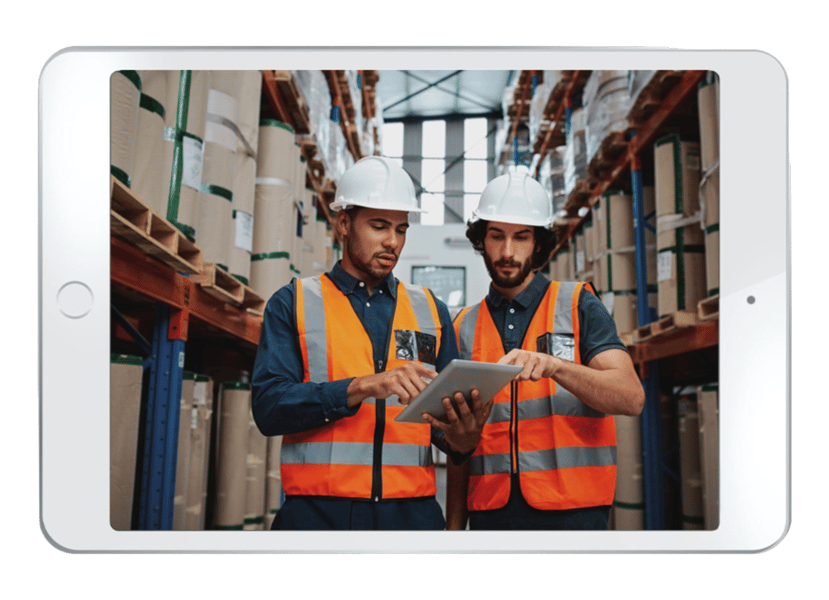
The recruitment of a customer is one thing; the retention of that same customer is another. To regain a customer lost through poor service, product, or account management is, yet, another thing. In general terms, how we treat a customer is very much tied to how profitable that customer is for us in the long term. Insofar as this concerns the connectivity between vendors and their clients, Customer Relationship Management (CRM) is the strategic business and manufacturing practice today that can make or break the loyalty of a customer.

Most CRM in modern manufacturing businesses, large and small, is handled by dedicated software applications, or is a part of larger enterprise resource planning software systems (ERP). When a company does decide that it wants to implement a CRM strategy, it usually takes its direction based upon a conceptual need in customer relations—either general relationship operational management or production/sales force automation.

In either case, there are several specific approaches to CRM that are specific to the type of customer served and their needs as customers. Here are two of the dozens of approaches to CRM in manufacturing: (more…)

Shop Efficiency Series: Eliminating Paperwork

Monday, May 19th, 2008

If you’re still using paper in the front office and on the shop floor (routers, schematics, timeclock, etc.), then you probably have some room for efficiency improvements. In fact, there are many manufacturers whose business practices and information systems are still built around the idea of moving paper documents though the course of their production processes. Paperwork is both a fragile and relatively bulky medium, and inevitably the slow moving information it contains will either be archived in space-consuming files or lost through extensive and often careless shop floor handling.

To counter these negative tendencies, manufacturing technology has advanced paper reduction techniques through digital mediums and storage. With digital media, massive amounts of information can be stored in one very small, very central location for immediate and simultaneous withdrawal of real-time data.

To be sure, some manufacturing operations are still comfortable functioning with paper. The reengineering of business practices is never an easy thing to do, and often the maintaining of a successful status quo seems to be the easiest thing to do. However, as more and more companies see the value of waste reduction in lean approaches to manufacturing, supply chain management, shortened lead times, and global competition all mean that (more…)

Scrap Accountability in Manufacturing

Monday, May 12th, 2008

With the cost of raw materials apparently not going down any time soon, scrap reduction has never been more important for manufacturers. To ensure the maximum use of materials, precision laser-cutting and water-jet machines have been developed. Computerized metal stamping can bring out parts and pieces to the very edge of the stock. In manufacturing, materials management has been made better because both machining technology and management through cost accounting have been improved.

In short, accountability is in place on the shop floor and in the front office, and this means that tracking scrap is part of the production process. Of course, the relationship between shop floor and front office has always been one made through data, and it is through data that the root causes of scrap and the methods for its reduction are found.

In short, scrap rate (or yield quality) is a function of production standards and the cost of quality itself: process settings, raw material lots, maintenance activity, operator focus, and so forth. Better working processes and more cost effectiveness in materials management, especially in the creation of scrap, can enhance a manufacturer’s competitive edge. And, competitiveness today is measured in terms of (more…)

Flexible Manufacturing Systems: An Overview

Monday, May 5th, 2008

Remaining in play is the name of the game in manufacturing competition today. That is to say, to find the orders that keep things going, and going well, you have to be on the field with your competitors in the first place. That’s where the action is found, that’s where potential customers come to look for services, parts, and products. Through consolidation, however, the competition is changing. The days of parity, where niches were carved to pinpoint exactly what you and your competitors were all about, are becoming fewer and fewer. To remain in play in manufacturing today, a company must often introduce flexibility into their shop floor operations. Once a novel notion, flexible manufacturing is increasingly taking hold as both a practice in the shop and a philosophical approach for management.

Manufacturers no longer work in isolation from each other; rather, they usually exist as part and parcel of a large supply chain whereby the degree of success of one partner is driven by the reciprocal success of the others. Throughout the supply chain, the potential for downstream producers being flexible in their production activities means that unless you are equally dynamic you could easily lose the work as the upstream partner. This concept is more fully considered as customizability whereby operations must be (more…)